
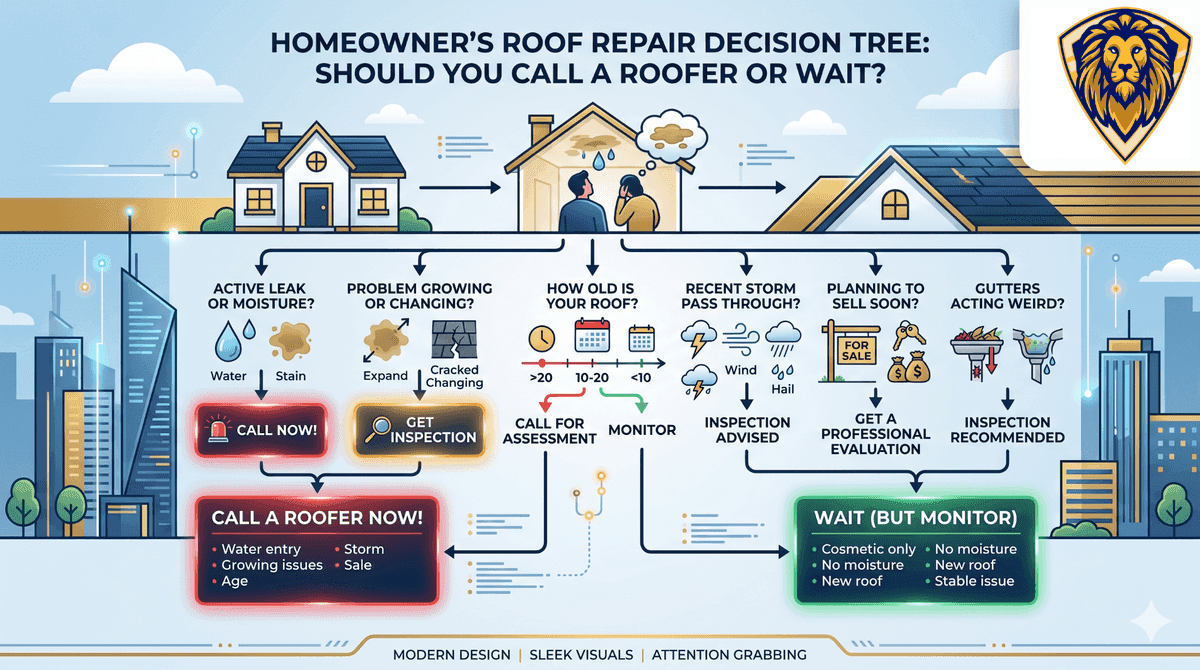
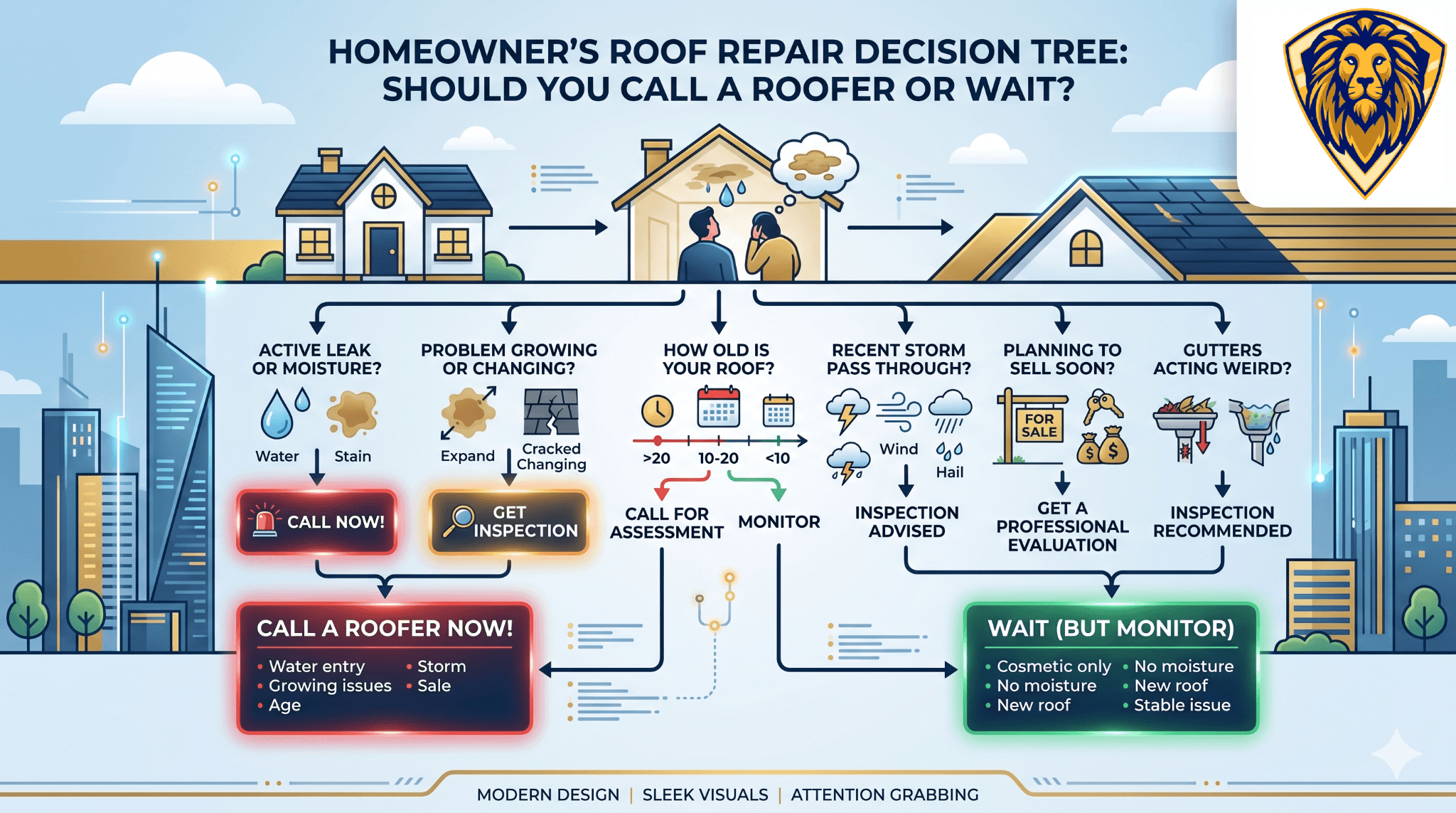
There's a moment most homeowners know a little too well. You spot something odd. A stain. A drip. A shingle that looks… tired. And suddenly you're standing there, mentally negotiating with your ceiling. Is this urgent? Can it wait until next month? Or next year? Roofs don't exactly send calendar invites when they're about to fail, and if you're managing a property (or working with property managers) these decisions come up even more often. This isn't a checklist. It's a simple decision tree you can actually use without overthinking it. For a broader overview of roofing decisions, check out our Roofing Guide for Clark County Homeowners.
First Question: Is Water Actively Getting In?
If water is entering your home right now, you don't wait. You call a roofer. Even a small, slow drip can cause mold growth within 24–48 hours, drywall damage within days, and structural damage over time (which gets expensive fast). According to FEMA, just one inch of water in a home can cause up to $25,000 in damage. That's not a typo.
If you see any of these signs, you're past the “wait and see” stage:
- Dripping water from the ceiling or light fixtures
- Wet insulation in the attic
- Expanding ceiling stains that grow after rain
For an immediate leak, don't wait on an inspection. Get in touch with our emergency roof repair team or learn how to slow a leak from inside the home while you wait.
Second Question: Is It Getting Worse?
Sometimes it's not dramatic. No dripping. No panic. Just… something that wasn't there before. A small stain. A loose shingle. A gutter that suddenly sounds like a waterfall during rain. This is where people hesitate, and honestly it makes sense. You might think, “It's minor. I'll keep an eye on it.” That works, sometimes. But here's the catch. Roof problems rarely stay the same. They either stay quiet (rare) or quietly get worse (much more common). According to the National Roofing Contractors Association, over 70% of major roof repairs started as minor issues that were ignored.
Ask yourself:
- Has the spot grown compared to last month?
- Is it showing up after every rain?
- Does something feel slightly… off?
If yes, it's probably worth getting an inspection. Not a full repair. Just eyes on it. Property managers tend to act faster here because they've seen how small issues snowball. They don't wait for Act 2.
Third Question: How Old Is Your Roof?
Age changes the rules. The older your roof, the less benefit of the doubt it deserves when something looks off.
| Roof Age | What It Means | Recommended Action |
|---|---|---|
| Under 10 years | Plenty of life left; isolated issues are normal. | Monitor minor issues, repair as needed. |
| 10–20 years | Middle age; materials begin to wear. | Be cautious; schedule an inspection. |
| 20+ years | Near or past end of service life. | Assume problems will multiply; plan for replacement. |
Most asphalt shingle roofs last 15–30 years depending on conditions. In the Pacific Northwest, with all the rain and moss, that lifespan often leans shorter. If your roof is older and you notice anything, it's less about “wait or call” and more about “how soon can someone take a look?” Waiting, in this case, is a bit like ignoring a check engine light. You can. But it rarely ends well. Our roof lifespan guide breaks down expected life by material.
Fourth Question: Did a Storm Just Pass Through?
Storm damage is sneaky. Wind can lift shingles just enough to break the seal. Rain gets underneath. Then things start to unravel quietly. If you've recently had heavy rain, strong winds, or falling branches, it's worth checking, even if everything looks fine from the ground.
According to insights shared by The Earnest Homes, many homeowners underestimate post-storm damage because “the visible signs are often delayed, while the underlying damage has already begun.” That delay is what gets people. In this case, calling a roofer isn't about fixing something obvious. It's about catching something early.
For more on post-storm red flags, see our guide to roof leaks in heavy rain.
Fifth Question: Are Your Gutters Acting Weird?
This one gets overlooked a lot. Your gutters are basically your roof's sidekick. When they fail, your roof starts taking the hit. Bad drainage can lead to roof edge rot, fascia damage, and leaks. And yet, many homeowners wait because it “just seems like a gutter issue.” Sometimes it is. Sometimes it's the start of something bigger.
Overflowing gutters
Water cascading over the edge during a normal rain. Usually means clogs, pitch problems, or undersized troughs.
Water pooling near foundation
Downspouts aren't moving water far enough away. This ends in basement leaks and soil erosion.
Sagging sections
Hangers are failing under the weight of debris or standing water. The gutter is on borrowed time.
Downspouts that don't drain
A dry downspout during a storm is a blockage. Water is backing up somewhere it shouldn't.
If any of these sound familiar, start with our guide to overflowing gutters or schedule a professional gutter repair.
Sixth Question: Are You Planning to Sell Soon?
If selling is even a remote possibility, don't wait. Buyers notice roofs. Inspectors notice roofs even more. A questionable roof can delay a sale, lower your home value, or kill negotiations entirely. Data from Zillow suggests homes with visible roof issues can sell for up to 10% less than comparable properties. That's not small. If you're thinking about selling within the next year, getting ahead of roof issues is usually the smarter move. Our new roof before selling guide breaks down the ROI.
The “Wait” Scenario (Yes, It Exists)
Not everything requires immediate action. You can reasonably wait if the issue is purely cosmetic, there's no moisture involved, the roof is relatively new, and the problem hasn't changed over time. But even then, “wait” should mean “I'll check this again soon,” not “I'll forget this exists until it becomes dramatic.” There's a difference.
A Quick Reality Check (Because It Helps)
Call a Roofer If…
- •Water is entering your home
- •The problem is growing
- •Your roof is older (20+ years)
- •A storm just hit
- •You're planning to sell
Wait (But Monitor) If…
- •It's minor and stable
- •Your roof is newer
- •There's no sign of moisture
- •The problem hasn't changed over time
- •The issue is purely cosmetic
That's the decision tree. Not perfect. But practical. Here's the slightly uncomfortable truth: waiting often feels like saving money, but in reality, it usually just delays a bigger bill. Insights shared by WeLease highlight that “preventative maintenance is consistently cheaper than reactive repairs, especially when water damage is involved.” It's not exciting advice. But it's accurate.
Unsure? Just Get an Inspection.
If you're unsure, you don't need to commit to a repair. Just get an inspection. It gives you clarity, peace of mind, and a baseline for future decisions. No guessing. No ceiling staring contests. Learn more about what a roof inspection costs.
When It Makes Sense to Call Gold Shield Roofing & Gutters
If you're in the Vancouver, WA area and something feels off, even slightly, it's worth having a local expert take a look. Gold Shield Roofing & Gutters focuses on honest assessments. Not pressure. Not upselling. Just a clear answer to the question you started with: “Do I need to act on this now?” Sometimes the answer is yes. Sometimes it's “keep an eye on it.” Either way, at least you'll know.
Frequently Asked Questions
How do I know if my roof leak is serious?
If water is entering your home or the stain is growing, it's serious. Even small leaks can lead to mold and structural damage quickly.
Can I wait to fix a small roof leak?
You can, briefly. But most small leaks worsen over time. It's safer to get an inspection early before the damage spreads into insulation, drywall, or framing.
How much does a roof inspection cost?
Roof inspections typically cost between $150 and $400, though many companies (Gold Shield included) offer free inspections depending on the situation.
Should I call a roofer after a storm even if I don't see damage?
Yes. Storm damage is often hidden. A quick inspection can catch issues before they become expensive repairs, especially after high winds or falling branches.
How long can I delay roof repairs?
It depends on the issue, but delays often increase costs. Minor problems can turn major within weeks or months, especially in wet climates like the Pacific Northwest.
Act Now or Keep an Eye On It? Let's Find Out.
Schedule a free roof inspection with our team. We'll give you an honest assessment — whether that means a quick fix, a full repair, or simply “your roof is fine, check back in a year.”