

Why Are My Gutters Overflowing? Common Causes and Expert Solutions for Clark County Homes
If water is pouring over the edge of your gutters right now, you need answers fast. Here's what's causing it and exactly how to fix it.
Jump to Section
Navigate directly to the information you need
If you're reading this, there's a good chance you're watching water pour over the edges of your gutters right now, or you just noticed the problem after a recent storm. Take a breath. Overflowing gutters are one of the most common issues we see in Vancouver and Clark County homes, and in most cases, the fix is straightforward once you identify the cause.
The Pacific Northwest delivers over 42 inches of rain annually, with the heaviest downpours concentrated between October and March. That means your gutters handle an enormous volume of water, and when something goes wrong, it shows up fast. In this guide, we'll walk you through the six most common reasons gutters overflow, what you can do right now to address the problem, and when it's time to call in a professional. For a broader overview of gutter care in our climate, check out our Complete Gutters Guide for Clark County Homeowners.
Why Are Gutters Overflowing in Vancouver, WA? Understanding the Problem
Before we get into specific causes, it's important to understand why gutter overflow matters so much and why it should never be ignored. Your gutter system has one critical job: channel rainwater away from your home's foundation, exterior walls, and landscaping. When gutters overflow, all that water ends up exactly where it can do the most damage. According to the National Weather Service Portland, our region regularly experiences sustained heavy rainfall events that push gutter systems to their limits.
What Happens When Gutters Overflow
- Foundation damage: Water pooling around your foundation causes cracks, settling, and basement flooding. Repairs often exceed $10,000.
- Fascia rot: Constant water exposure rots fascia boards and damages exterior wall materials.
- Basement and crawl space flooding: Overflow saturates the soil around your home, forcing moisture through walls and floors.
- Landscape erosion: Uncontrolled water runoff washes away mulch, topsoil, and plants along your home's perimeter.
- Mold and mildew: Persistent moisture behind walls creates ideal conditions for mold growth, a serious health hazard.
The urgency depends on severity. If water is actively cascading over your gutters during a storm, the damage is happening right now. Even minor, occasional overflow during heavy rain events adds up over time, slowly eroding soil, staining exterior walls, and weakening your foundation. The good news is that most causes of gutter overflow are fixable, and many don't require expensive repairs.
The 6 Most Common Causes of Gutter Overflow
Through years of servicing gutter systems across Clark County, we've found that virtually every case of gutter overflow falls into one of these six categories. Understanding which one you're dealing with is the first step toward fixing it.
Cause 1: Clogged Gutters (Leaves, Pine Needles, and Debris)
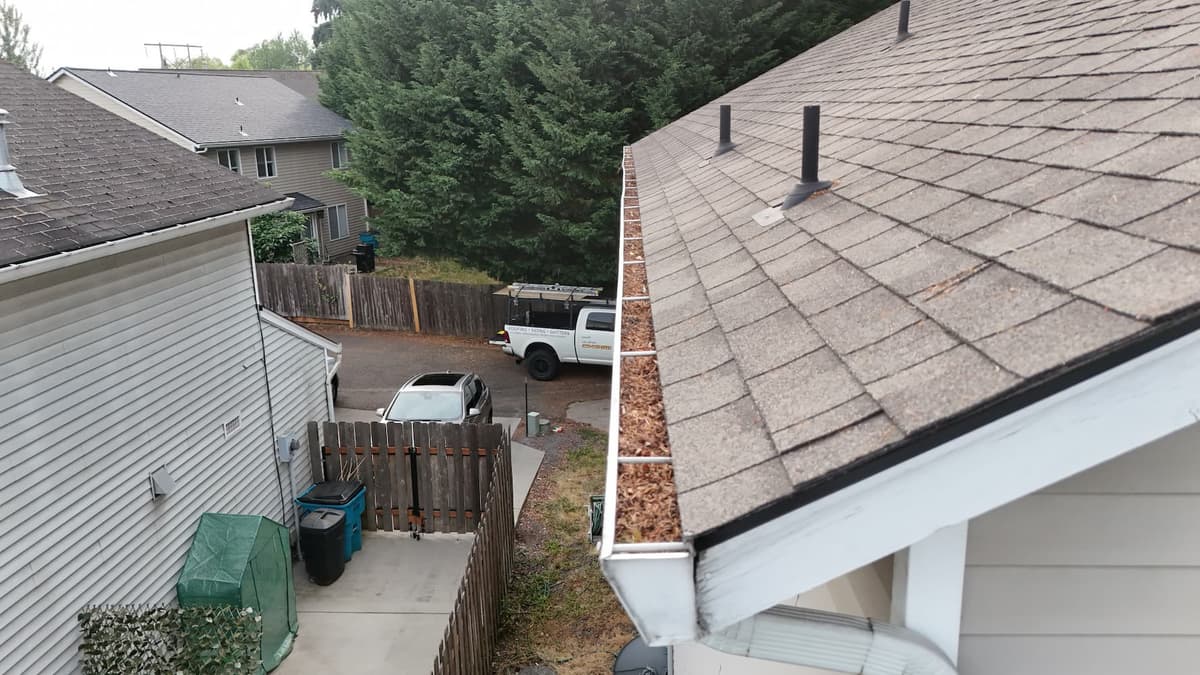
This is the number one cause of gutter overflow, and it accounts for roughly 80% of the calls we receive. Leaves, pine needles, twigs, shingle granules, and even bird nests accumulate in your gutters over time, blocking the flow of water toward the downspouts. In the PNW, this is compounded by our dense tree coverage. Douglas firs, western red cedars, and big leaf maples all shed prolifically, and their debris piles up fast, especially during fall storms.
The telltale signs of clogged gutters include water spilling uniformly over the front edge during rain, visible debris poking above the gutter line, and plants or moss growing inside the gutter channel. If you can safely reach your gutters with a ladder, a quick visual check will confirm whether clogs are the problem. Regular professional gutter cleaning is the most effective prevention, but we'll cover DIY options below.
Cause 2: Blocked or Clogged Downspouts
Even if your gutter channels look clear, a single blocked downspout can cause an entire section of gutter to overflow. Downspout clogs often form where the gutter meets the downspout opening (the outlet), inside elbows where the downspout changes direction, or at the bottom where it meets the ground-level drain. These clogs are harder to spot because they're hidden inside the pipe.
To check for a downspout clog, watch your downspouts during rain. If water trickles out slowly, or not at all, while the gutter above is full, you've found the problem. You can often clear minor downspout clogs by running a garden hose from the top at full pressure, or by using a plumber's snake to dislodge the blockage. For stubborn clogs, professional gutter repair may be necessary.
Cause 3: Improper Gutter Pitch or Slope
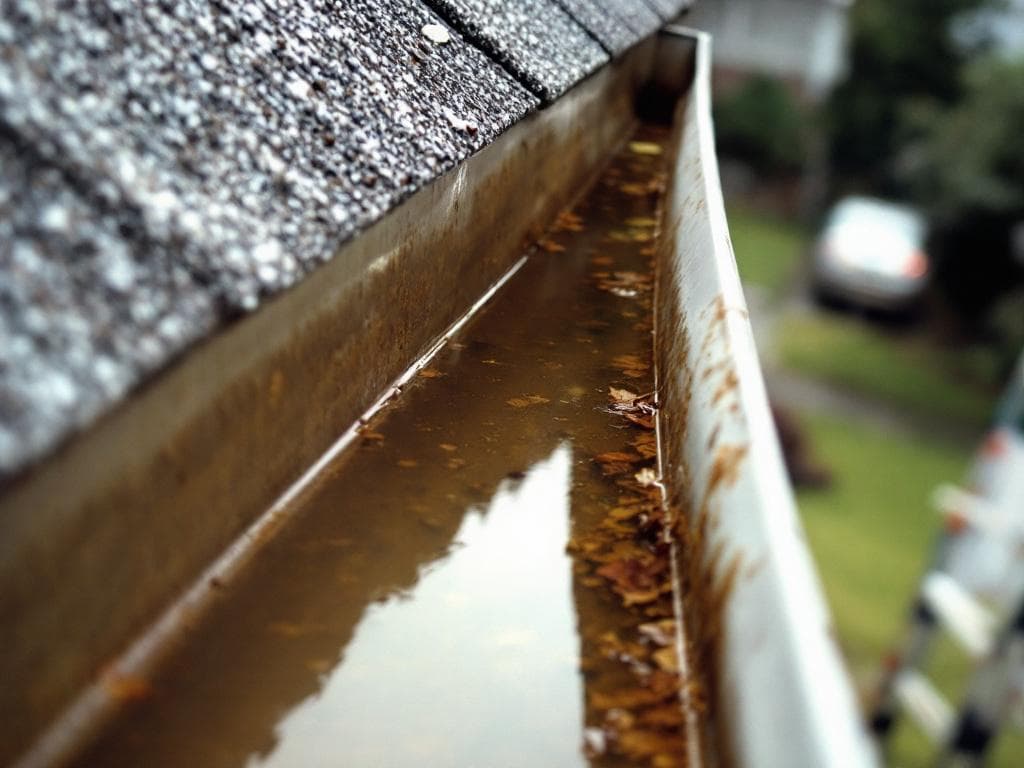
Gutters need a slight slope, typically about 1/4 inch for every 10 feet, to direct water toward the downspouts. If your gutters are perfectly level, or worse, pitched in the wrong direction, water pools in low spots and eventually overflows. Improper pitch can result from poor initial installation, settling of the house structure over time, or hangers that have loosened and allowed the gutter to shift.
You can check your gutter pitch by looking for standing water after a rainstorm. If puddles remain in certain sections hours after the rain has stopped, those sections likely have a pitch problem. While this is technically fixable by adjusting hangers, getting the pitch exactly right across a long run of gutter requires experience and a level. This is one repair we generally recommend leaving to professionals because incorrect pitch adjustment can make the problem worse or create new overflow points.
Cause 4: Undersized Gutters for Your Roof

Many homes in Clark County were built with standard 5-inch gutters, which may not be large enough for the home's actual roof area and rainfall intensity. A large roof collects more water, and a steep pitch delivers it to the gutters faster. If your gutters overflow even when they're clean, undersized gutters may be the root cause. This is especially common on homes with complex rooflines where multiple roof planes funnel water to the same gutter section.
We cover this topic in depth in our article on choosing the right gutter size for your home. The short version: most homes in our region benefit from 6-inch gutters paired with 3x4-inch downspouts, which handle roughly 40% more water than standard 5-inch systems. If your gutters were sized incorrectly when built, no amount of cleaning will prevent overflow during heavy rain.
Cause 5: Sagging or Damaged Gutters
Over time, gutters can sag, pull away from the fascia board, or develop holes and cracks. Sagging creates low points where water collects instead of flowing toward downspouts, leading to overflow at specific spots rather than along the entire gutter length. The weight of accumulated debris and standing water accelerates sagging, creating a vicious cycle where the problem gets worse the longer it's ignored.
Common signs include visible gaps between the gutter and fascia, sections that visibly dip or bow downward, rust spots or holes, and separated seams on sectional gutters. Minor sagging can sometimes be fixed by replacing individual hangers, but if the fascia board behind the gutter has rotted, a more involved repair is needed. Inspect your gutters from the ground on a sunny day, looking along the gutter line for any dips or separations. If you spot damage, our gutter repair team can assess whether repair or replacement makes more sense.
Cause 6: Heavy Rainfall Overwhelming the System
Sometimes your gutters are clean, properly pitched, correctly sized, and in great condition, yet they still overflow during an especially intense downpour. Vancouver experiences what meteorologists call "atmospheric river" events, where warm, moisture-laden air from the Pacific dumps enormous amounts of rain in short periods. During these events, even well-maintained gutter systems can briefly overflow.
If your gutters only overflow during the most extreme rainstorms and handle everything else fine, this is likely your situation. It's normal and not necessarily cause for alarm, as long as the overflow is temporary and doesn't happen during average rain. However, if you're seeing overflow during moderate rainfall, one of the other five causes above is likely the real problem. Consider adding additional downspouts to reduce the volume each section must handle, or upgrading to larger capacity gutters for long-term peace of mind.
DIY vs. Professional Gutter Cleaning: When to Call the Experts
Many homeowners can handle basic gutter cleaning on their own, especially on single-story homes with straightforward rooflines. But there's a clear line between what's safe and practical for DIY and what requires professional tools and expertise. Knowing where that line falls could save you a trip to the emergency room or thousands in avoidable damage. For a full DIY walkthrough, see our guide on how to inspect your own gutters.
Safe for DIY
- Cleaning debris from single-story gutters
- Flushing downspouts with a garden hose
- Removing visible clogs at downspout openings
- Visual inspection from the ground or a safe ladder position
- Applying gutter sealant to small leaks at seams
Call a Professional
- Two-story or higher homes
- Steep roof pitches requiring roof access
- Gutters pulling away from the fascia
- Sagging sections or visible structural damage
- Recurring overflow after cleaning (pitch or sizing issues)
- Power lines near the gutter line
Ladder Safety Reminder
Over 500,000 ladder-related injuries occur in the United States each year, and falls from ladders are a leading cause of home injury. Always use a sturdy extension ladder on level ground, maintain three points of contact, never overreach, and always have someone nearby while you work. If you feel uncomfortable at any height, stop immediately and call a professional. Your safety is worth more than any gutter cleaning job.
Tools You'll Need for DIY Gutter Cleaning
If you decide to clean your gutters yourself, gather these supplies before you start: a sturdy extension ladder, heavy-duty work gloves, safety glasses, a gutter scoop or plastic trowel, a bucket with a hook to hang on the ladder, a garden hose with spray nozzle, and a plumber's snake for stubborn downspout clogs. Work in sections, moving the ladder frequently rather than overreaching, and always clean from the downspout outward so you push debris toward an exit point.
Are Your Gutters Too Small? Why Vancouver Homes Need Larger Capacity Gutters
One of the most overlooked causes of gutter overflow is simply having gutters that are too small for the volume of water your roof generates. This is incredibly common in the Pacific Northwest, where many homes were built with standard 5-inch K-style gutters that were sized for regions with less rainfall. As This Old House explains, gutter sizing should account for roof area, roof pitch, and local rainfall intensity, not just national averages.
5-Inch Gutters (Standard)
- Handles approximately 5,520 sq ft of roof drainage
- Common on older homes and budget builds
- Adequate for small roofs or low-rainfall areas
- Often overwhelmed during PNW storms
- Paired with 2x3-inch downspouts
6-Inch Gutters (Recommended)
- Handles approximately 7,960 sq ft of roof drainage
- 40% more capacity than 5-inch systems
- Ideal for PNW rainfall intensity
- Better performance on steep or large roofs
- Paired with 3x4-inch downspouts
How do you know if your gutters are undersized? The clearest sign is overflow during moderate rain when gutters are clean. If you've ruled out clogs, pitch issues, and damage, measure your gutters. Standard 5-inch K-style gutters are about 5 inches across the top opening. If your home has a roof area larger than 1,500 square feet draining to a single gutter run, or if you have roof valleys that concentrate water flow, upgrading to 6-inch seamless gutters is likely the permanent fix.
Seamless gutters are also worth considering during any upgrade. Unlike sectional gutters that join in pieces, seamless gutters are fabricated on-site in a single continuous piece, eliminating the seams that are prone to leaks and clogs. Learn more about your options on our gutter materials page, or read our detailed comparison of gutter sizes for homes in the Pacific Northwest.
Preventing Future Gutter Overflow: Gutter Guards and Maintenance Plans
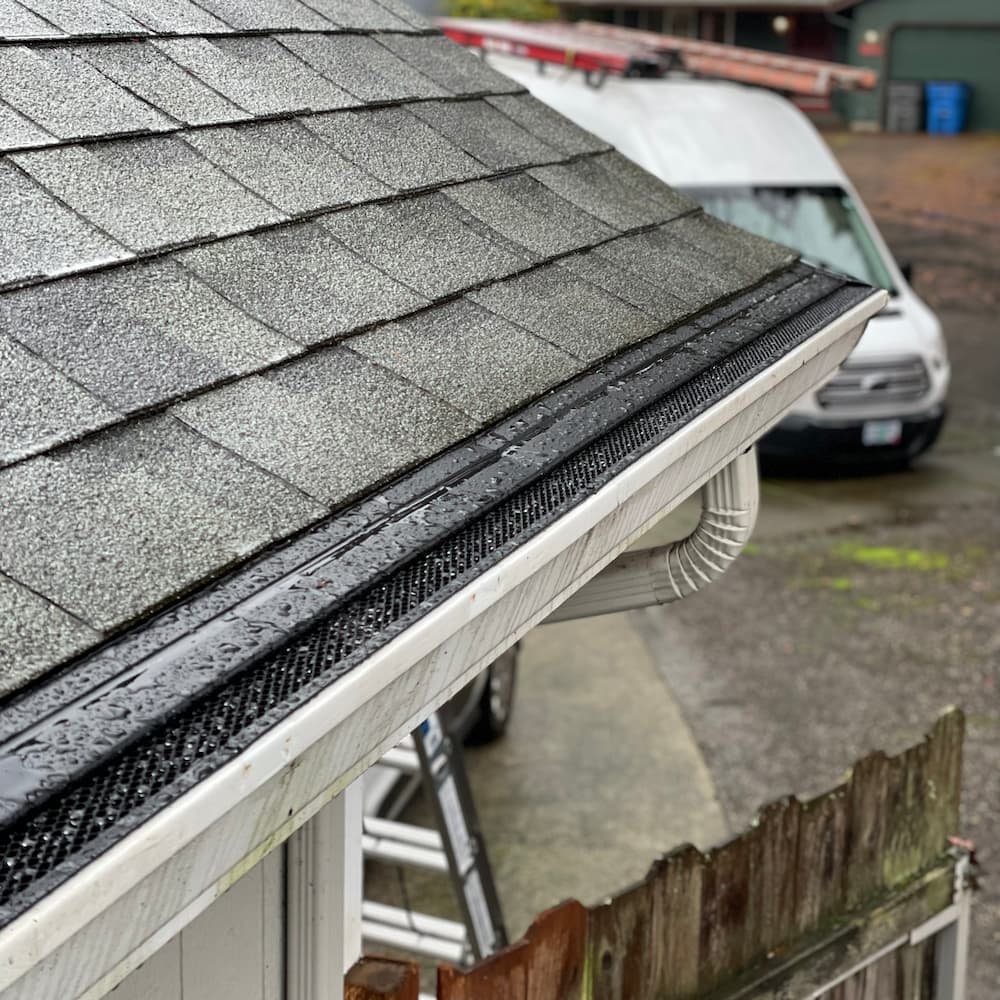
Once you've fixed the immediate problem, the next step is making sure it doesn't happen again. Prevention is always cheaper than emergency repairs, and a combination of gutter guards, regular maintenance, and smart landscaping can keep your gutters flowing freely year-round. For a deep dive into gutter protection, read our guide on whether gutter guards are worth it.
Gutter Guard Options
Quality gutter guards are the single most effective way to prevent debris-related overflow. For Pacific Northwest homes, micro-mesh guards are the best choice because they block even fine pine needles while handling heavy rainfall. Avoid foam inserts in our climate, as they trap moisture and promote moss growth. Screen guards work for homes with minimal tree coverage but let smaller debris through.
Seasonal Maintenance Schedule for Clark County
- March (Spring): Inspect for winter damage, clear any debris from winter storms, check for moss growth, verify all hangers are secure.
- June (Summer): Light inspection, trim tree branches within 6 feet of your roofline, check downspout extensions are directing water away from the foundation.
- November (Fall): Full cleaning after leaf drop, clear all downspouts, test water flow with a garden hose, ensure system is ready for heavy rain season.
- January (Winter): Quick check after major storms, look for ice damage or overflow signs, verify downspout drainage isn't pooling near the foundation.
Additional Preventive Measures
Beyond gutter guards and regular cleaning, consider these steps to minimize overflow risk: install downspout extensions or splash blocks to direct water at least 4-6 feet from your foundation, add additional downspouts to long gutter runs (one downspout per 30-40 feet of gutter is ideal), keep tree branches trimmed at least 6 feet from your roof to reduce debris, and ensure your yard grading slopes away from the house so overflow water doesn't pool at the foundation.
Emergency Gutter Repair: What to Do Right Now
Active Overflow? Do This Now
If your gutters are overflowing during a storm right now, here are immediate steps to minimize water damage while you arrange a permanent fix:
- Do NOT climb a ladder in the rain. It is not worth the risk. Period.
- Place buckets or tarps beneath the worst overflow points to redirect water away from the foundation.
- Check your downspout outlets. If water isn't flowing out the bottom, the downspout is clogged. You can sometimes tap the outside of the downspout to dislodge clogs from ground level.
- Extend downspouts temporarily with flexible drain pipe to move water further from your home.
- Dig a small temporary trench to redirect pooling water away from your foundation if it's accumulating.
- Document the overflow with photos and video for insurance purposes and to show your contractor.
Once the storm passes, address the problem as soon as conditions are safe. If the overflow was caused by a simple clog, you may be able to clear it yourself once the rain stops and everything dries out. For more serious issues like sagging gutters, damaged sections, or overflow that happens even when gutters are clean, contact our emergency gutter repair team. We respond quickly because we understand that every hour of overflow increases the risk of expensive water damage.
When to File an Insurance Claim
If gutter overflow has caused interior water damage, foundation issues, or structural damage to your home, your homeowner's insurance may cover the repairs (though typically not the gutter fix itself). Document everything with photos and video before making any repairs. Most policies require prompt reporting, so contact your insurance company as soon as you notice damage. Our team can work directly with your adjuster if needed.
Don't wait for the next storm to take action. If your gutters overflowed once, they will overflow again until the underlying cause is addressed. Whether you need a simple cleaning, gutter repairs, guard installation, or a complete system upgrade, getting ahead of the problem now saves you from far more expensive damage later. Contact us today or call (360) 947-7119 for a free assessment.
Stop the Overflow: Your Next Steps
Gutter overflow is not something to ignore or put off. Whether you're dealing with a simple clog or a system that needs upgrading, the cost of fixing your gutters is always less than the cost of repairing the damage they cause when they fail. Start by identifying which of the six causes above matches your situation, then decide whether it's a DIY fix or a job for professionals.
If you're not sure what's causing the problem, or if you've tried cleaning and the overflow continues, we're here to help. Gold Shield Roofing And Gutters provides free gutter assessments for homeowners throughout Clark County. We'll diagnose the problem, explain your options honestly, and give you a straightforward quote with no pressure. From gutter cleaning and repairs to gutter guard installation and full system replacement, we handle every aspect of gutter care for Vancouver homes.
Overflowing Gutters? We Can Fix That Today.
Don't wait for the next storm to cause more damage. Clark County's trusted gutter experts are ready to help.