
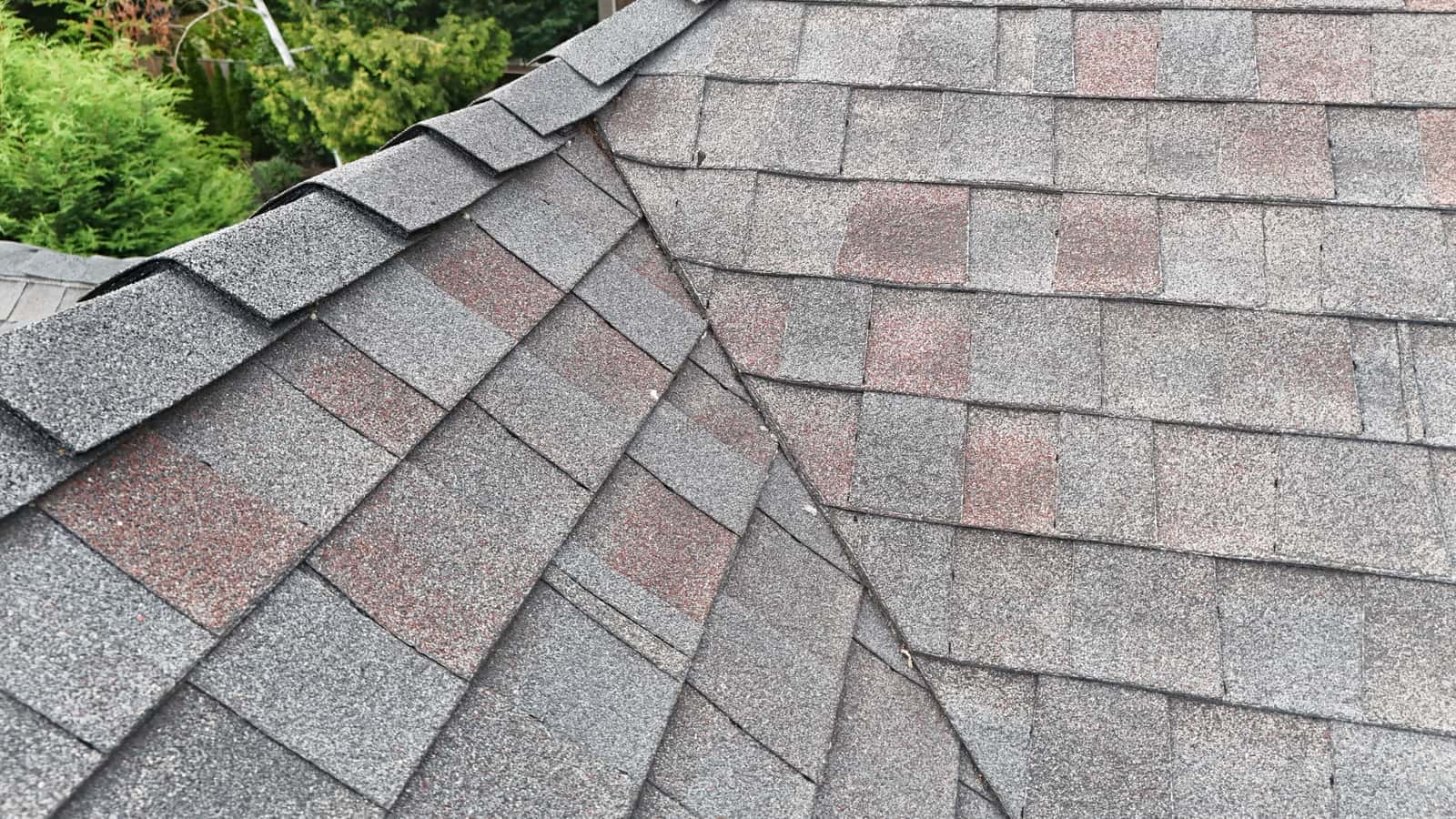
Best Shingle for the Pacific Northwest: Every Major Brand Compared
Almost every brand makes a shingle that works here, so the real question is which details matter in a cold, wet climate, from the nailing zone to cold-weather sealing, and which brand delivers them. Here's the honest comparison.
Jump to Section
Navigate directly to the information you need
Quick Answer
What Actually Matters in a PNW Shingle
A "best shingle" list written for a hot or hail-prone state will steer you wrong here. Our roofs are punished by moisture, moss, damp shade, and cold, not heat. Here is what actually predicts how a shingle ages in our climate, roughly in order of importance:
- Polymer-modified (SBS) asphalt. Standard shingle asphalt dries out and turns brittle, then cracks under our constant wet-dry and freeze-thaw cycling. Polymer-modified (rubberized, or SBS) asphalt stays flexible, which resists cracking and helps the shingle hold its granules. It also handles cold installation far better, which matters a lot here.
- Algae-resistant granules. The dark streaks on PNW roofs are blue-green algae, which loves damp shade. Algae-resistant granules (usually copper-infused) prevent most of that streaking and keep a roof cleaner for years longer.
- A forgiving nailing zone. Nails have to land in a specific band to hold properly. A wide or reinforced nailing zone gives the crew more tolerance and grips better, which means fewer blow-offs and leaks. Just as important is whether the asphalt flexes without cracking right at the nailing zone, the weakest point on the shingle.
- Sealant (adhesive) strength. Factory sealant strips bond the courses together so the roof resists wind uplift. More and stronger sealant means a better bond, and it matters even more in the cold, when shingles are slow to seal.
- Wind rating. Our fall and winter storms test how well shingles stay sealed and attached. Most architectural shingles are rated up to 110-130 mph when installed as a full system, which is plenty for our storms, so the headline number matters less than the sealant and the install.
A straight take on the "Class 4" hail rating
You'll see "Class 4 impact rated" marketed hard. The UL 2218 test behind it is real (a steel ball dropped on the shingle), but as hail protection it's close to meaningless in the Pacific Northwest: we barely get hail. Its actual value here is as a proxy. A shingle usually only earns Class 4 because it has flexible, polymer-modified asphalt, and that flexibility is the thing that matters in our cold, wet climate. So don't pay extra for the hail rating; value the SBS flexibility behind it.
Every Major Shingle Brand, Compared
Here are the major asphalt shingle brands sold in our region, with their flagship architectural line and how they line up on what matters here. Click any brand to see its official lineup.
| Brand (flagship line) | Algae-resistant | SBS (polymer-modified) | Nailing zone width | Sealant / adhesive | Max wind* |
|---|---|---|---|---|---|
| Malarkey (Highlander AR) | Yes (3M) | Standard across line | 1-5/16" (The Zone) | 6 bonds, 2 rain seals | Up to 130 mph (Class H) |
| GAF (Timberline HDZ) | Yes (StainGuard Plus) | Upgrade line only | 1.81" (StrikeZone) | Dual-seal strip | Up to 130 mph (Class H) |
| Owens Corning (Duration) | Yes (StreakGuard) | Upgrade line (Duration FLEX) | Fabric strip (SureNail) | SureNail strip + sealant | Up to 130 mph (Class H) |
| CertainTeed (Landmark) | Yes (StreakFighter) | Upgrade line (NorthGate) | ~1" (standard) | Factory sealant | Up to 130 mph (Class H) |
| PABCO (Premier) | Yes | Upgrade line (Paramount Advantage) | ~1" (standard) | Factory sealant | Up to 130 mph (Class H) |
| IKO (Dynasty) | Yes | Upgrade line (Nordic) | Reinforced (ArmourZone) | Factory sealant | Up to 130 mph (Class H) |
| Atlas (Pinnacle Pro) | Yes (3M Scotchgard) | Upgrade line (StormMaster) | ~1" (standard) | FASTAC sealant | Up to 130 mph (Class H) |
| TAMKO (Heritage) | Yes | Upgrade line (StormFighter FLEX) | ~1" (standard) | Factory sealant | Up to 130 mph (Class H) |
*Max wind requires enhanced or full-system installation with the brand's starter, hip-and-ridge, and accessories; standard installs are lower, and most flagship architectural shingles meet ASTM D7158 Class H. Nailing-zone widths and sealant counts are only published by some brands (shown where available); standard nailing zones run roughly 1 inch. On price, GAF, Owens Corning, IKO, Atlas, and TAMKO sit mid to budget, while Malarkey and CertainTeed run mid-premium. Specs and line names change, so confirm for any shingle you're quoted.
Two honest notes on that table. First, GAF actually has the widest published nailing zone (1.81 inches vs Malarkey's 1-5/16), so if raw nailing width is your single metric, GAF wins it. Second, most brands don't publish sealant counts at all, while Malarkey does. The bigger pattern: nearly every brand offers algae-resistant granules and at least one polymer-modified line, but most reserve SBS asphalt for a premium upgrade, while Malarkey builds it into its standard architectural shingles. In a climate this cold and wet, that flexibility, plus more adhesive bonds, is what matters most, and it's the reason a slightly narrower nailing zone doesn't change the verdict.
What Independent Testing Found: The Shingle Olympics
If you'd rather not take a roofer's word for it, an independent contractor in Indiana, Daniel Wagenmaker of Reliance Roof Troop, ran a hands-on series called the Shingle Olympics, ranking 12 popular shingles worst to best (with a 14-shingle follow-up). The tests hit the exact factors above: how the asphalt flexes without cracking at the nailing zone, sealant strength, granule retention, and impact.
The result: Malarkey took gold and silver, winning in what the tester called a landslide. Its polymer-modified asphalt flexed without cracking where standard shingles failed. We are not affiliated with Reliance Roof Troop, which is part of why the result is worth citing: it is a third-party roofer testing brands, not a manufacturer marketing claim.
One caveat for honesty: those are bench-style stress tests, not a 20-year field study, and the tester is in the Midwest, not the PNW. But the traits they reward, flexibility and granule retention, are exactly the ones that matter in our wet, freeze-thaw climate.
Cold-Weather Installation: A Northwest Reality
Here is a factor most "best shingle" articles ignore: temperature at install. We re-roof through cool, damp shoulder seasons, and the cold changes how shingles behave in two ways.
- Sealant needs warmth to bond. The self-seal adhesive strips activate with heat and sun, generally once roof temperatures reach the mid-40s Fahrenheit and up. Install in colder weather and the shingles may not fully seal until spring, leaving them vulnerable to wind until they do. A good crew hand-seals with roofing cement when it's too cold for the strips to grab.
- Cold makes standard shingles brittle. Below roughly 40 degrees, ordinary oxidized-asphalt shingles stiffen and can crack or break when they're bent, cut, or nailed. Polymer-modified (SBS) shingles stay flexible in the cold, so they handle winter installs with far fewer cracks and callbacks.
That second point is the whole ballgame here. In a region where roofs often go on in cold, wet conditions, a shingle that stays flexible when it's cold is not a spec-sheet footnote, it's the difference between a clean install and hairline cracks you won't see until they leak. It's the practical reason a polymer-modified shingle is the right call for the Pacific Northwest.
Our Pick for the Pacific Northwest
Add it all up, the wet, the moss, and especially the cold, and we install Malarkey. The reasons are specific and verifiable:
- SBS asphalt as standard. Malarkey's NEX polymer-modified asphalt rubberizes the shingle core for flexibility and tear resistance, and it's standard across the architectural lineup, not a premium upcharge. That flexibility is what holds up to our cold installs and freeze-thaw.
- 3M algae-resistant granules on its architectural shingles fight the black streaks our climate breeds.
- Proof in the numbers. The Vista AR shingle delivers up to 65% greater granule retention than the ASTM D3462 standard and up to 25% greater tear strength (and yes, the Class 4 rating, useful here mainly as proof of that flexibility).
- More adhesive where it counts. Malarkey's published specs put the Highlander AR nailing area at 1-5/16 inches (up to 2X a standard shingle), with 50% more adhesive bonds and twice the rain seals of a standard shingle. That's what keeps shingles down and sealed through our wind and rain.
- A local company. Malarkey has been headquartered and manufacturing in Portland, Oregon since 1956, so these shingles are designed and built in the same wet climate they have to survive, right across the river from us.
To be clear, this isn't a knock on the others. GAF, Owens Corning, and CertainTeed are excellent, widely installed brands, and their algae-resistant, polymer-modified upgrade lines will serve a PNW home well. PABCO is a solid regional option made right here in Tacoma. Our pick simply reflects which brand makes the PNW-critical features, flexibility and algae resistance, standard rather than optional.
One last truth no brand chart captures: the installer matters as much as the shingle. Proper attic ventilation, flashing, nailing, and cold-weather technique are what let any shingle reach its rated lifespan here. As a Malarkey Emerald Pro and Certified Residential Contractor, our crews are trained and warrantied to install to spec. You can see the lines we carry on our roofing materials page, or read the bigger picture in our guide to the best roofing material for the Pacific Northwest.
Frequently Asked Questions
What is the best shingle brand for the Pacific Northwest?
For the PNW, the best shingles combine algae-resistant granules with polymer-modified (SBS) asphalt, which stays flexible in our cold, wet climate. Malarkey makes those features standard and won the independent Shingle Olympics testing, which is why we install it. GAF, Owens Corning, and CertainTeed are also strong choices in their polymer-modified upgrade lines.
What are the major asphalt shingle brands?
The major brands sold in our region are GAF, Owens Corning, CertainTeed, Malarkey, IKO, Atlas, TAMKO, and PABCO (a regional manufacturer based in Tacoma, WA). GAF and Owens Corning are the highest-volume brands nationally; Malarkey and CertainTeed are known for higher-end durability.
Is Malarkey better than GAF or Owens Corning?
All three are reputable. The PNW-specific edge for Malarkey is that its polymer-modified (SBS) asphalt is standard across its architectural lineup, while GAF and Owens Corning typically offer SBS only in a premium upgrade line. That flexibility matters most in our cold installs and freeze-thaw cycles. For many homeowners a GAF or Owens Corning upgrade line is still an excellent choice.
Does the Class 4 hail rating matter in the Pacific Northwest?
Not for hail, really. We get very little hail, so the Class 4 rating is largely marketing here. Its real value is as a proxy: a shingle usually earns Class 4 because it uses flexible, polymer-modified asphalt, and that flexibility is what actually matters in our cold, wet climate. Value the SBS asphalt behind the rating, not the hail claim itself.
What temperature is too cold to install asphalt shingles?
As a rule of thumb, below about 40 degrees Fahrenheit standard shingles get brittle and the self-seal strips are slow to bond, so crews hand-seal with roofing cement and take extra care handling them. Polymer-modified (SBS) shingles stay flexible in the cold and install far more reliably, which is a real advantage in our climate.
What is polymer-modified (SBS) asphalt, and why does it matter here?
Standard shingle asphalt dries out and turns brittle, then cracks under wet-dry and freeze-thaw cycling. Polymer-modified, or rubberized (SBS), asphalt stays flexible, which resists cracking, holds granules better, and handles cold-weather installation. In a cold, wet climate that flexibility directly extends roof life.
Do algae-resistant shingles really work?
Yes, to a large degree. The dark streaks on PNW roofs are blue-green algae, and algae-resistant granules (usually copper-infused) prevent most of that streaking and keep a roof cleaner for years longer. Heavily shaded, north-facing slopes can still benefit from occasional treatment.
Is PABCO a good shingle brand?
PABCO is a solid regional choice, and a nice local story: it is manufactured in Tacoma, Washington. Its Paramount Advantage line is a polymer-modified shingle, putting it on par with the upgrade lines from the national brands.
Is Malarkey a local company?
Yes. Malarkey Roofing Products has been headquartered and manufacturing in Portland, Oregon since 1956, right across the river from us. For homeowners in Portland and SW Washington, that means the shingles are designed and built by a company that knows our wet climate firsthand.
Want Help Choosing the Right Shingle?
We'll match the right shingle and brand to your home, slopes, and budget, then install it to spec, even in our cold season. Get a free, no-obligation estimate from Vancouver's trusted roofing team.
Licensed • Insured • Malarkey Emerald Pro • Serving Clark County